Aluminum high pressure air (HPA) tanks for less lethal weapons need to be manufactured to certified high quality standards out of the highest grades of aluminum. DCEC Cylinders offers comprehensive options for HPA tank capacity and precision regulator combinations that are ideally suited for integration in less lethal weapon systems.
HPA powered less lethal weapons reduce the risk of avoidable injury
Less lethal weapons are standard issue for police and security services worldwide, the combination of soft and reduced impact munitions with high pressure air as a short-range propellant minimizes the risks that come with loading standard weapons like shotguns and grenade launchers with alternative less lethal munitions. Using HPA tanks to power less lethal weapons reduces the risk of injury and the problem of accidental loading standard weapons with lethal rounds instead of less lethal alternatives.
Police, security & military forces employ HPA less lethal weapons to neutralize multiple threats
Less lethal weapons enable police, security and military forces to lawfully engage multiple threats with a significant reduction in risk of serious injury or loss of life. This is especially important when required to control and disperse people who are not armed with potentially lethal weapons, where use of lethal force cannot be unjustified.
Less lethal weapons unfortunately cannot be guaranteed to be free of risks, they are designed to reduce the risk of serious injury or death, which is why they are called ‘less lethal’ rather than ‘non-lethal’ weapons. However, the use of HPA tanks to power less lethal weapons reduces risk to both security personnel and bystanders.
What are standard types of less lethal weapon systems?
Chemical, electric and kinetic less lethal weapon options are all in service use worldwide, with the choice of effect being a significant influence on deployment and on the risk to targets. Chemical sprays and kinetic launched gas canisters, electric shock prods and tasers, and kinetic launchers for bean bags, rubber and plastic bullets.
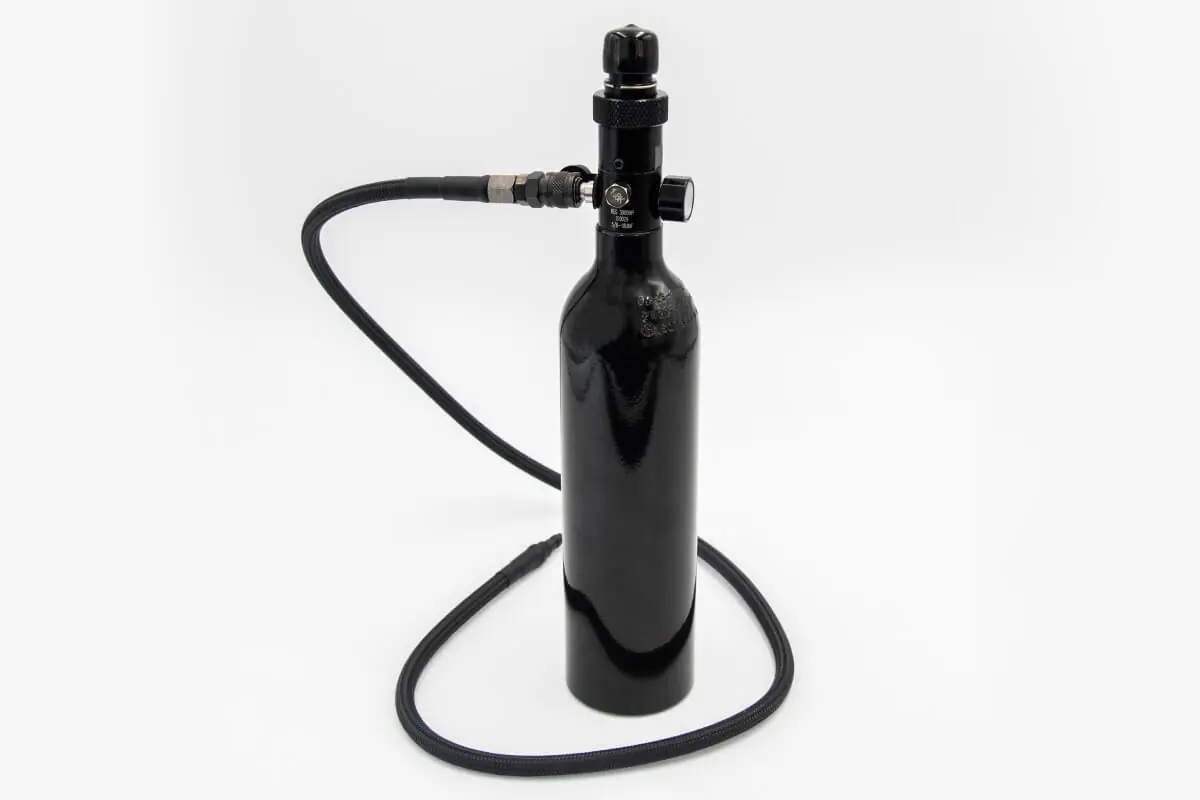
Advanced less lethal weapon systems use HPA tanks as propellant
Highly advanced less lethal weapon systems, like FN Herstal’s FN 303® Smart Protector use HPA tanks for propellant and include design features to significantly reduce risk. The FN Herstal system has a built-in camera with image recognition that prevents aiming at the head of a target, which is the most common cause of lethal outcomes from the use of less lethal weapons.
- Less lethal weapons are commonly used by police and security forces
- HPA tanks can be used for charging kinetic less lethal weapons
- Advanced less lethal weapons have deterrent impact beyond the range of hand thrown missiles
- Some less lethal weapons systems use 12 gauge shotguns & 40mm grenade launchers
- Reduced risk less lethal weapon systems are unable to fire lethal ammunition
Chemical & electroshock weapons have side effects & limitations
Chemical weapons cause irritation, and can have long-term effects on the lungs and mucous membranes, electroshock weapons cause temporary paralysis by disrupting natural body nerve signals, which causes both discomfort and can have serious side effects when used on people who have existing heart or nervous conditions. Kinetic weapons cause pain or discomfort from impact, and may result in temporary physical injuries such as bruising.
High pressure air (HPA) is a comparatively safe way to power less lethal weapons
High pressure air (HPA) is a simple, easily managed, comparatively safe way of powering a less lethal weapon. HPA less lethal weapons cannot be loaded with lethal ammunition in error or intentionally, and provide peace of mind to law enforcement personnel and authorities who are concerned about ensuring that fatalities and serious injuries are minimized when deploying less lethal weapons for crowd control or security operations.
Kinetic HPA powered less lethal weapons offer greater flexibility
Direct spray chemical and tethered electrical less lethal weapons are only effective at short range. Kinetic HPA powered less lethal weapons can be designed for use at both the short ranges of electrical and chemical weapons and at longer ranges, including the use of HPA for launching gas canisters if required. This enables HPA less lethal weapons to effectively respond to stone and projectile throwing at distances of over 30m.
Why is HPA cylinder pressure and regulation important for less lethal weapons?
High pressure air (HPA) tanks and regulator combinations need to provide consistent, reliable cylinder pressure and regulation to maintain accuracy and ensure safe less lethal munition velocities. At the comparatively low velocities of less lethal weapons, munition trajectories can be significantly altered by imprecise pressure regulation, which can result in hitting the wrong target, or risky shot placement.
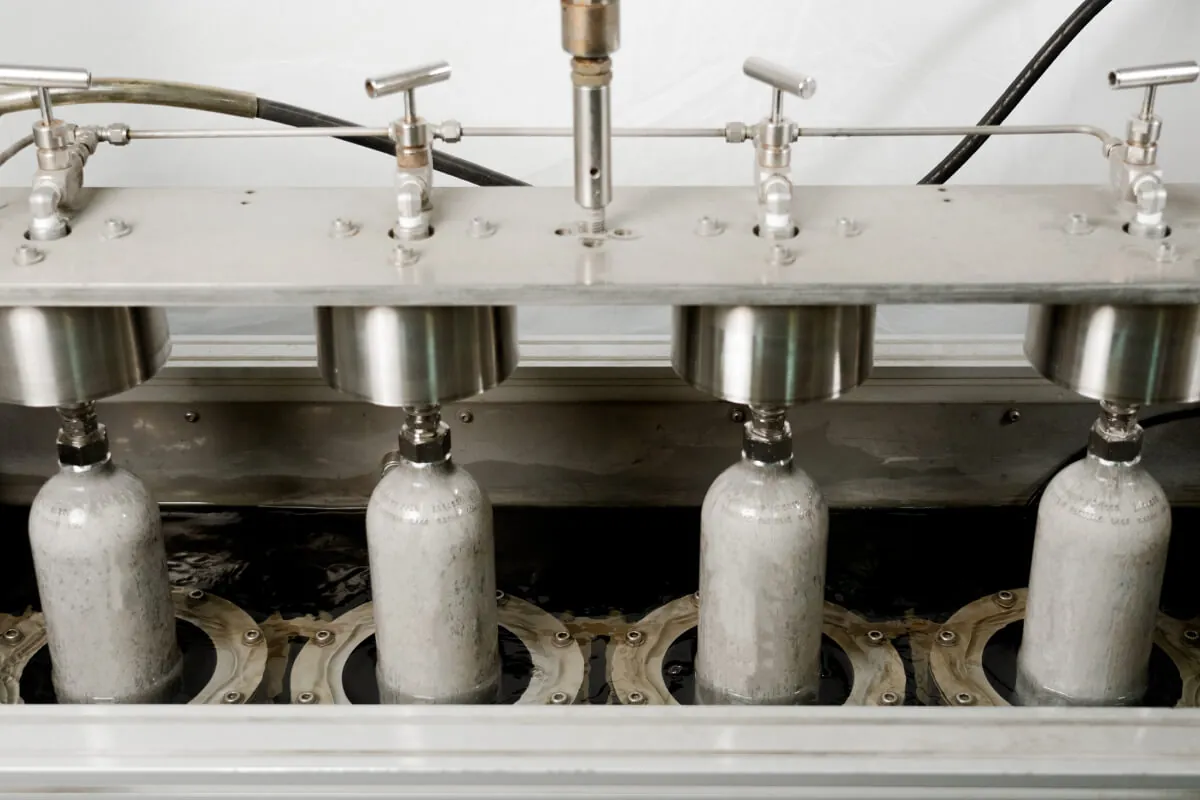
DCEC Cylinders HPA cylinders & regulators for less lethal weapons
DCEC Cylinders manufacture HPA aluminum cylinders and regulators that are perfectly suited to powering less lethal weapons. We manufacture HPA cylinders to TPED and ISO standards with stringent quality control measures that deliver reliable, consistent, performance. We manufacture our HPA tanks for less lethal weapons and other demanding applications using inclusion free aluminum that exceeds the requirements for standard HPA cylinders.
- Stringent, certified, quality control systems
- Inclusion-free aluminum for safe, reliable, hard wearing HPA tanks
- Customizable logos, coating & printing for your brand identity
- Custom regulator engineering for your less lethal weapon system
- Precision pressure regulator options
We can deliver our HPA cylinders with or without regulator systems to suit your less lethal weapon requirements. We also manufacture cylinders, regulators and tanks for airsoft guns, paintball, PCP airguns, and recoil simulation for VR tactical training. Contact us to discuss HPA tank and regulator combinations that match your less lethal weapon requirements.